
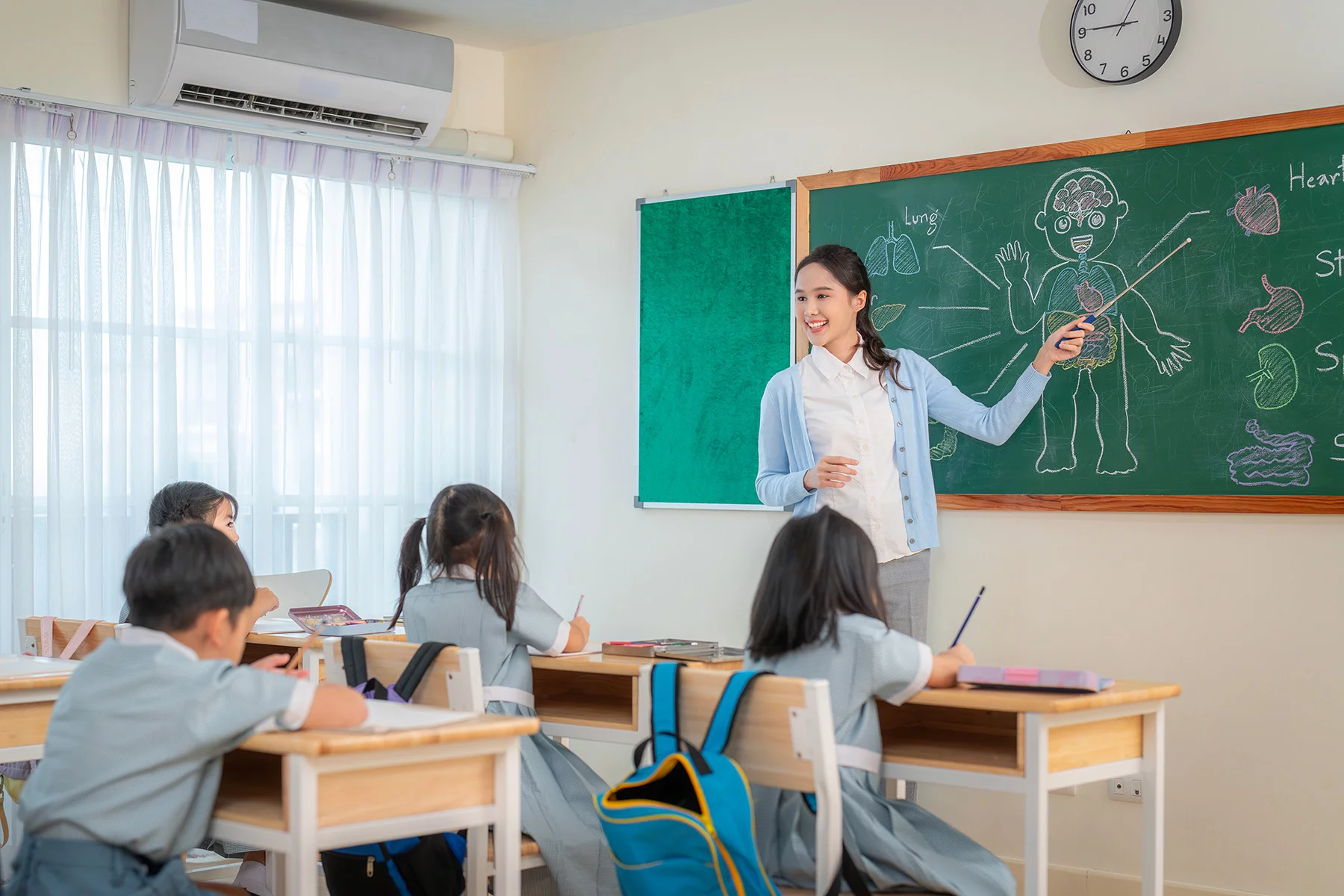
For families relocating, planning a longer stay, or reassessing their child’s education, finding the right international school in Thailand often becomes one of the biggest decisions they make. It is not simply about academics or location. The right school can shape how quickly a child settles, how confidently they progress, and how well the whole family adapts to life in a new country.
A Good School Should Offer More Than an International Label
The term “international school” can mean different things in practice. Some schools place greater emphasis on language diversity, others on academic rigour, and others on a broader lifestyle offering. That is why families need to look beyond the label itself and consider what the school actually delivers day to day.
A strong international school should combine high academic standards with a learning environment that helps children adapt and thrive. That includes clear teaching, thoughtful pastoral support, and a school culture where pupils from different backgrounds feel included rather than simply enrolled. For many families, that wider sense of belonging matters just as much as the curriculum.
It is also worth considering whether the school feels coherent from top to bottom. A well-run school usually has a clear sense of purpose. You can see it in the quality of communication, the organisation of the school day, and the confidence of the pupils themselves.
Consistency Across Year Groups Matters
One of the most important things parents can assess is whether the school offers a joined-up educational journey rather than a strong start followed by uncertainty later on. This matters especially for families hoping to stay in Thailand for several years, or those who want continuity through key developmental stages.
Children benefit when expectations build logically as they move through the school. Early years, primary, and secondary education should not feel like disconnected experiences. Instead, there should be a visible thread running through the whole school, in teaching standards, behaviour expectations, enrichment opportunities, and academic ambition.
That kind of consistency helps children feel secure. It also gives parents greater confidence that progress is being taken seriously over time, rather than measured only in isolated snapshots.
The Best Fit Often Comes Down to Educational Philosophy
Families often begin by comparing fees, facilities, and location, but a school’s educational approach may have the greatest long-term impact. Some children do best in an environment with very clear academic expectations and a structured pace. Others flourish where there is more flexibility, discussion, or project-led learning.

Neither approach is automatically right or wrong. What matters is whether the school’s philosophy matches the child’s needs and the family’s priorities. Parents should think about how their child learns best, how much challenge they are ready for, and what kind of environment helps them feel engaged rather than pressured.
This is especially important in Thailand, where international schools can vary widely in style, curriculum, and classroom culture. A school may look impressive on paper, but the real question is whether it will suit the child who walks through the gates each morning.
Support Beyond the Classroom Makes a Real Difference
Moving countries or starting in a new school system can be exciting, but it can also be unsettling for children. That is why strong pastoral care is not a secondary feature. It is part of what makes a school genuinely effective.
Children settle more successfully when schools pay attention to routine, wellbeing, communication, and community. New pupils often need help building friendships, understanding expectations, and gaining confidence in unfamiliar surroundings. Schools that handle this well create a much smoother experience for the whole family.
Parents should also look at how the school communicates with them. Clear updates, approachable staff, and a sense of partnership between school and home can make a substantial difference. When communication is strong, concerns are easier to address early and progress feels more transparent.
Choosing a School With Long-Term Confidence
The strongest choice is rarely the one with the flashiest presentation. It is the school that combines substance, clarity, and a genuine ability to support children over time. Families choosing an international school in Thailand are not just selecting a place of study. They are choosing an environment that will shape daily life, future opportunities, and how comfortably their child grows in a new setting.
When that choice is made carefully, school becomes more than a practical necessity. It becomes one of the most valuable parts of a family’s experience in Thailand.