
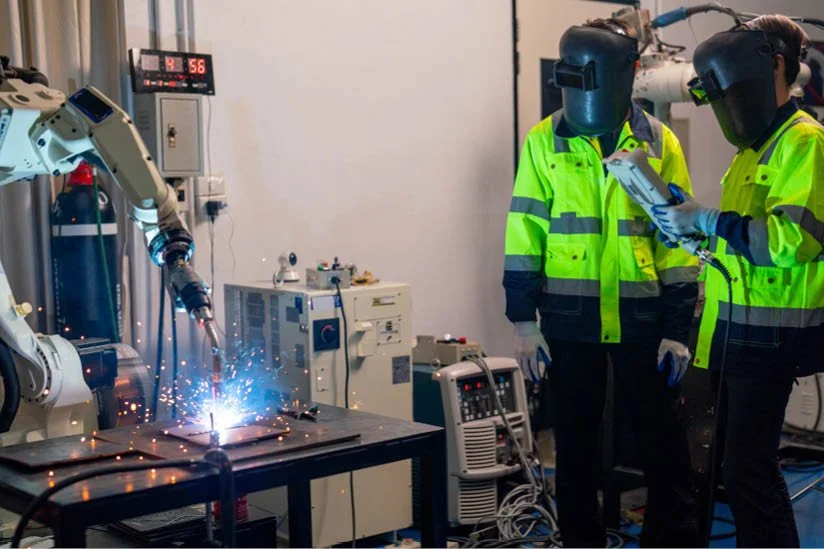
The new hire signs the paperwork, gets a badge, watches a slideshow on hand washing or lockout, and walks onto the floor. Somewhere in that first week, someone points at a machine and says, “That one uses a laser. Don’t look at the beam.” That’s the training.
Then the annual refresher rolls around eleven months later, and the company treats that as the moment laser safety gets handled properly. By then, the person has been in the room with the beam for almost a year. If something was going to go wrong, it already had every chance to.
The First Year Is When People Get Hurt
New employees get hurt at rates that don’t match their share of the workforce. They don’t know the room yet. They don’t know which noises are normal, which shortcuts the crew has quietly agreed not to take, or which piece of PPE the last person skipped because it fogged up.
Workers’-comp insurers have been saying for years that the first six months on any job are the highest-risk window for injury, and the fix is hazard-specific training up front, not a general orientation followed by silence.
Laser environments make that gap worse. A beam doesn’t announce itself the way a moving forklift or an open flame does. A Class 4 system can be running with almost no visible cue that anything dangerous is happening in the room.
OSHA Already Expects Training Before the Work Starts
Federal guidance has long treated laser training as a precondition for the job, not a follow-up to it. An OSHA interpretation letter spells out that employees assigned to install, adjust, and operate laser equipment must be trained, and that the employer is responsible for instructing each operator in line with the manufacturer’s recommendations and the applicable hazards.
The obligation attaches to the assignment, not to the anniversary date. If a new hire is going to work with or near a laser system in week one, the training belongs in week one.
What Onboarding Should Actually Cover
Onboarding doesn’t have to become a semester course. It has to cover the things a person needs before they walk into the controlled area for the first time:
- Classification. Which class of laser is in the room, and what that class can do to skin and eyes.
- The nominal hazard zone. Where the boundary is, who is allowed inside it, and how entry is controlled.
- PPE that matches the wavelength. Not any goggles. The right optical density for the specific system.
- Non-beam hazards. Plume, electrical, fire, and reflective surfaces around the work.
- Who the LSO is. A name, not a title on an org chart.
A role-appropriate laser safety course can carry most of that load before day one, so the on-site walk-through reinforces what the new hire already understands rather than introducing it cold.
Move the Training, Keep the Refresher
None of this argues against the annual refresher. Keep it. Standards change, equipment changes, and habits drift.
But the refresher works best when it has something to refresh. Put the first real training at the front of the employment relationship, where the risk actually lives, and the yearly review starts doing the job it was designed for.