
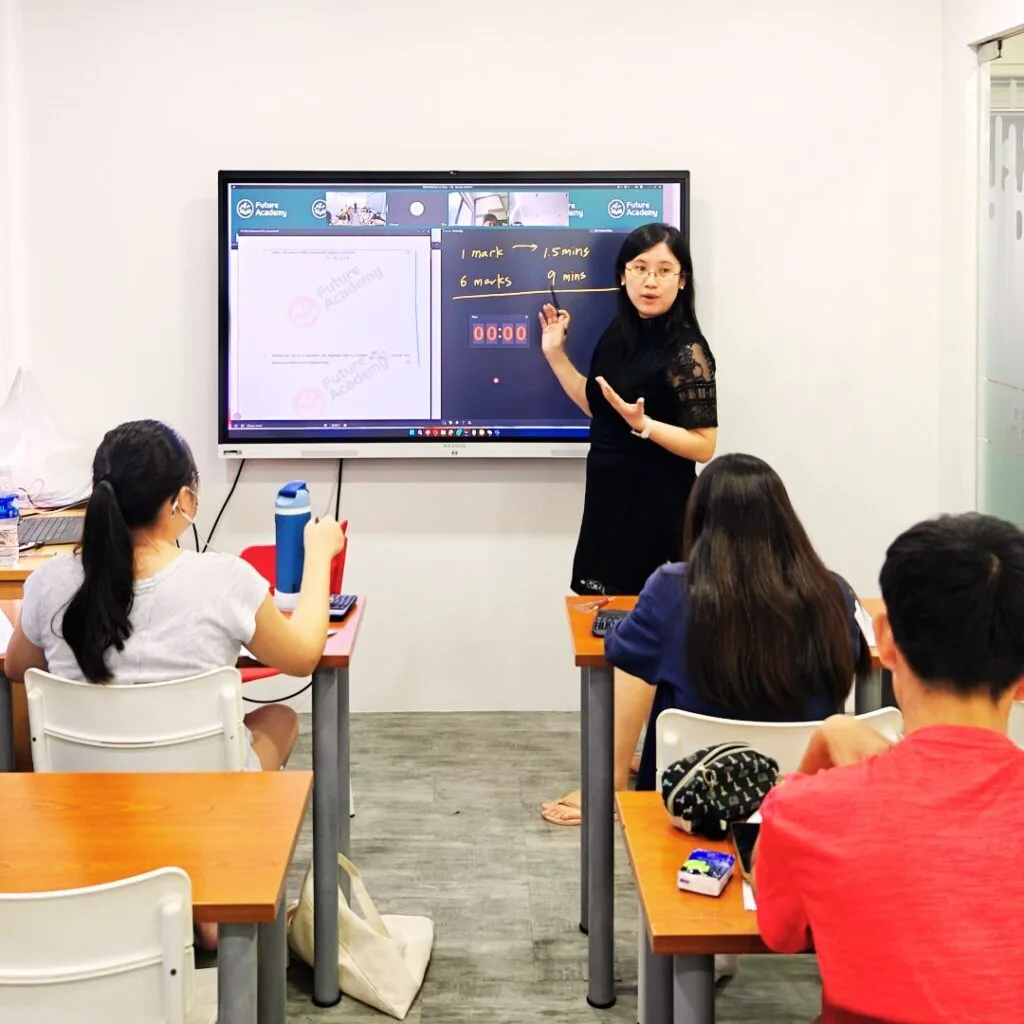
IB Physics can become difficult not because one task is impossible, but because several demanding responsibilities arrive together. Students may be learning new content, preparing for school assessments, completing laboratory work, refining their scientific investigation and keeping up with the rest of the Diploma Programme. Families considering the Best Physics Tuition Bukit Timah should look for support that improves planning and scientific independence, rather than simply helping a student finish the next deadline.
The internal assessment, often discussed as the Physics IA, requires students to carry out an individual scientific investigation within the requirements and guidance set by their school and the current IB course. At the same time, examination preparation requires broad syllabus coverage, accurate problem-solving and the ability to interpret unfamiliar data. These demands should not be managed as two unrelated projects. A well-designed investigation can strengthen experimental reasoning, while disciplined examination revision can improve the Physics understanding used in the investigation.
Why the Workload Becomes Uneven
IB students often have several weeks in which Physics appears manageable, followed by periods when laboratory deadlines, tests and other subject submissions overlap. The problem is not always the total amount of work. It is the uneven distribution of tasks.
An investigation also contains different types of work. Choosing a focused question requires conceptual judgement. Designing the method requires control of variables and realistic measurement. Data collection requires organisation. Analysis requires graphs, uncertainty awareness and interpretation. Writing requires clear scientific communication.
Students who schedule “work on IA” as one vague task may spend an entire evening adjusting wording or formatting while avoiding the more difficult scientific decision. The project then feels busy but does not move forward.
The same pattern appears in examination revision. “Revise waves” is too broad to guide a useful session. The student needs to know whether the goal is concept retrieval, mathematical practice, graph interpretation or timed application.
Treat the Investigation as a Chain of Decisions
A strong investigation is easier to manage when the student views it as a sequence rather than one large document.
The research question should be narrow enough to investigate with available equipment, time and measurement precision. The variables should be clearly defined, and the method should generate data capable of answering the question.
Before data collection, the student should test the setup. A short pilot can reveal whether the range is too small, the readings are unstable or an important control variable has been ignored. Discovering these issues early is far better than collecting a complete but unusable data set.
Students should also identify what analysis will be required before taking measurements. If the intended relationship should become linear after a transformation, the student needs enough data across a sensible range. If a gradient has physical meaning, the relevant variables and units must be recorded accurately.
This forward planning reduces the risk of trying to force a conclusion from data that was never suited to the question.
Keep Ownership of the Scientific Thinking
Support is useful when it helps a student ask better questions, test assumptions and understand the data. It becomes unhelpful when someone else effectively designs the investigation or supplies interpretations the student cannot explain.
An IB student should be able to justify why a variable was selected, why the chosen range is appropriate, what the graph shows and how the limitations affect the conclusion. If the student cannot defend these decisions verbally, polishing the written report will not solve the underlying weakness.
Parents should therefore be cautious about support that promises to fix the IA as a document. The safer and more educational approach is to improve the student’s Physics reasoning, planning and communication while respecting the school’s rules on academic integrity and permitted assistance.
Build an IA Timeline Backwards from School Deadlines
Students should use the dates provided by their school and work backwards. The final submission date is not the only deadline that matters.
A practical timeline includes separate points for confirming the question, completing a pilot, collecting data, processing results, drafting the analysis, evaluating limitations and revising the final report. Time should also be reserved for teacher feedback in accordance with school procedures.
Each stage needs a visible output. “Research for two hours” is not measurable. “Confirm the independent variable, define the measurement method and list three control variables” is.
The timeline should contain buffer space. Experiments may need to be repeated, equipment may be unavailable or a graph may reveal that the selected range does not show the expected relationship clearly. A schedule with no room for correction creates pressure to accept weak data.
Do Not Allow the IA to Replace Examination Revision
A common mistake is giving the investigation every available Physics hour for several weeks. The student may make progress on the report but lose fluency across the wider syllabus.
A maintenance routine can prevent this. Even during an IA-heavy period, the student should retain short weekly contact with examination content. This may include one mixed problem set, one retrieval session and one review of previous errors.
The sessions do not need to be long. Their purpose is to stop earlier topics from becoming inaccessible. Once the investigation deadline passes, the student can increase examination practice without needing to relearn the entire course.
Likewise, students should not abandon the IA during a test-heavy week. One small planned output, such as completing a data table or revising the method explanation, can preserve momentum.
Separate Physics Difficulties from Writing Difficulties
Students sometimes spend hours rewriting a paragraph because the scientific idea is not yet clear. No amount of stylistic editing can fix uncertain reasoning.
Before drafting, the student should be able to state the point simply. What relationship does the data show? What evidence supports that interpretation? Which limitation affects the result, and in what direction or manner?
Once the scientific claim is clear, the writing becomes easier. The report should lead the reader from method to evidence to conclusion without requiring the reader to guess how the parts connect.
The same principle helps examination answers. Students who can express the Physics in a clear verbal chain are less dependent on memorised model wording.
Make Data Analysis Part of Regular Physics Learning
Investigation work can strengthen examination skills when students understand the connections.
Selecting axes, drawing a best-fit line, interpreting a gradient, considering uncertainty and evaluating anomalies are not IA-only tasks. They are part of scientific reasoning and can appear in written assessments.
Students should avoid treating graph software as a substitute for understanding. They need to know why a particular graph is useful, what the trend means and whether the model is justified by the data.
When a value differs from expectation, the student should not automatically change the method or delete the point. The first step is to check calculation, units, transcription and measurement conditions. An unexpected result may reveal a limitation or an assumption that needs discussion.
Use Weekly Planning Based on Cognitive Demand
Not every Physics task requires the same level of concentration.
Designing an investigation, interpreting difficult data and solving unfamiliar problems require high-quality attention. Formatting references, labelling figures or organising notes can be completed during lower-energy periods.
Students should place demanding work in the parts of the week where concentration is strongest. A two-hour block late at night may be less useful than a focused 45-minute session earlier.
A weekly plan should also consider the entire IB workload. Physics cannot take every high-energy period. Students need to coordinate major deadlines across subjects and decide what must be advanced before the busiest week arrives.
How Parents Can Support Without Managing the Project
Parents can help create structure without taking ownership.
Ask the student what the next scientific decision is, not whether the entire IA is finished. Encourage the use of school deadlines and teacher guidance. Protect time for sleep and realistic planning.
Parents should avoid selecting the research question, rewriting sections or interpreting the data for the student. These actions may weaken independence and can create academic integrity concerns.
A useful conversation focuses on process: What evidence do you need? What does the pilot show? Which task is blocking progress? What will be completed in the next session?
What Suitable Physics Support Should Provide
Good support should strengthen the knowledge and skills that allow the student to make responsible decisions. This can include conceptual clarification, experimental reasoning, graph interpretation, uncertainty discussion and clear scientific explanation.
It should also help the student maintain examination readiness. A tutor can identify which syllabus areas are becoming inactive and build a manageable practice cycle around school deadlines.
Students considering TGC ACADEMY near Bukit Timah should evaluate whether the programme develops understanding that transfers between investigation work and examination questions. The student should leave with clearer reasoning and greater independence, not simply a more polished document.
Frequently Asked Questions
Q. Should students finish the Physics IA before revising for examinations?
Ans. No. The balance will change around deadlines, but some examination retrieval and problem-solving should continue so earlier topics do not become inactive.
Q. Can a tutor choose or rewrite an IB investigation for a student?
Ans. The student must retain ownership and follow the school’s academic integrity rules. Appropriate support focuses on teaching Physics, asking guiding questions and improving the student’s ability to justify decisions.
Q. Why is a pilot investigation useful?
Ans. A pilot can reveal unstable measurements, an unsuitable range, missing controls or equipment limitations before the full data set is collected.
Q. How can students avoid spending hours on minor formatting?
Ans. Every session should begin with a specific scientific output. Formatting should be placed later and should not replace decisions about method, evidence or analysis.
Q. What should parents do when several IB deadlines overlap?
Ans. Help the student map deadlines, break work into visible outputs and protect a realistic weekly schedule. The student should still communicate with teachers and retain responsibility for the work.
Manage the Scientific Process, Not Just the Submission
The IA and examination load become manageable when students stop treating them as competing emergencies. Investigation planning, data analysis and scientific explanation can reinforce the same reasoning needed in examination questions.
By working backwards from school deadlines, protecting a minimum revision routine and keeping ownership of every scientific decision, students can produce stronger work without allowing one requirement to destabilise the rest of the programme.
TGC Academy Bukit Timah Location Details
Business Name: TGC Academy (Bukit Timah)
Address: 170 Upper Bukit Timah Rd, #03-K24 Shopping Centre, Singapore 588179
Phone: +65 8920 0792
Email: [email protected]
Website: https://www.tgc.sg/
Operating Hours:
Monday: 3:00 PM to 9:30 PM
Tuesday: 3:00 PM to 9:30 PM
Wednesday: Closed
Thursday: Closed
Friday: Closed
Saturday: Closed
Sunday: Closed